Industry Insights | October 23, 2026 | Fengyin Motor
In commercial refrigeration equipment, maintaining effective heat dissipation is essential for stable cooling performance. While compressors and refrigeration components receive much of the attention, the condenser fan motor also plays an important role in the overall cooling system.
For commercial freezer manufacturers, selecting an appropriate condenser fan motor requires more than checking voltage or motor size. Airflow requirements, fan blade compatibility, installation dimensions, and operating conditions must all be considered.
Shaded pole motors remain an option for certain compact, low-power refrigeration applications because of their simple construction and cost-effective design.
This article examines the role of condenser fan motors and explains the key factors equipment manufacturers should evaluate when choosing a suitable motor solution.
The condenser is responsible for releasing heat absorbed by the refrigeration system, together with heat generated during compression.
In air-cooled refrigeration equipment, a fan moves air across the condenser coil to support heat transfer.
Insufficient airflow can contribute to higher condensing temperatures and pressures, potentially affecting the cooling system's performance and operating efficiency.
Common causes of poor condenser airflow include:
Dust accumulation on condenser coils
Incorrect fan blade selection
Improper motor rotation direction
Restricted ventilation around equipment
Motor or fan blade malfunction
For this reason, condenser fan motor selection should be treated as part of the overall refrigeration system design.
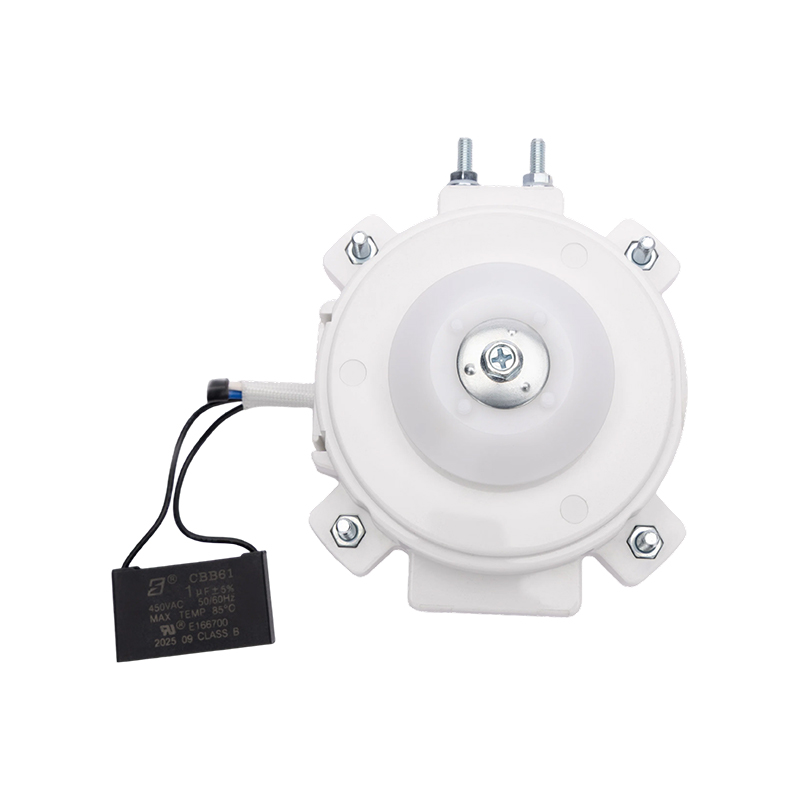
Shaded pole motors are single-phase AC induction motors known for their simple operating principle.
A conventional shaded pole motor does not require an external starting capacitor or centrifugal starting switch. This reduces the complexity of its starting mechanism.
For suitable small fan applications, potential advantages include:
Simple motor construction
Relatively low initial cost
Compact design options
Straightforward integration into selected fan assemblies
Suitability for low-starting-torque applications
However, shaded pole motors generally have lower efficiency and starting torque than many alternative motor technologies.
They should therefore be selected according to the actual airflow load, duty requirements, and equipment performance targets rather than cost alone.
The motor's rated voltage and frequency must match the intended electrical supply.
International equipment manufacturers may require different motor specifications depending on the destination market.
Electrical compatibility should be confirmed before sample testing or production.
Motor speed influences fan operation, but RPM alone does not determine airflow performance.
The actual airflow depends on multiple factors, including fan diameter, blade shape, blade pitch, rotation direction, and airflow resistance within the refrigeration equipment.
Manufacturers should evaluate the complete motor-and-fan assembly under representative operating conditions.
The connection between the condenser fan blade and the motor shaft is an important mechanical consideration.
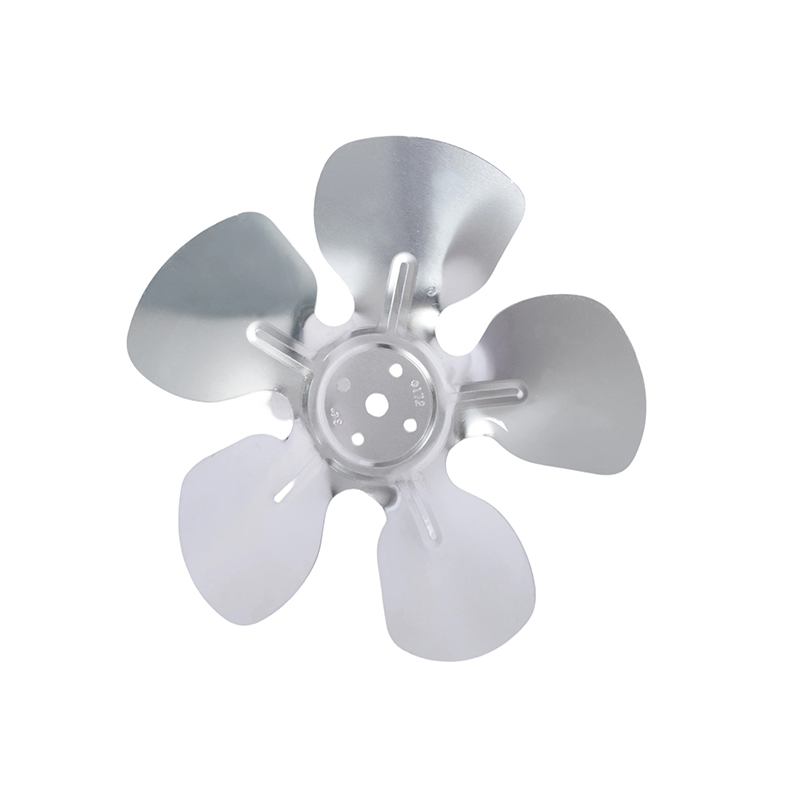
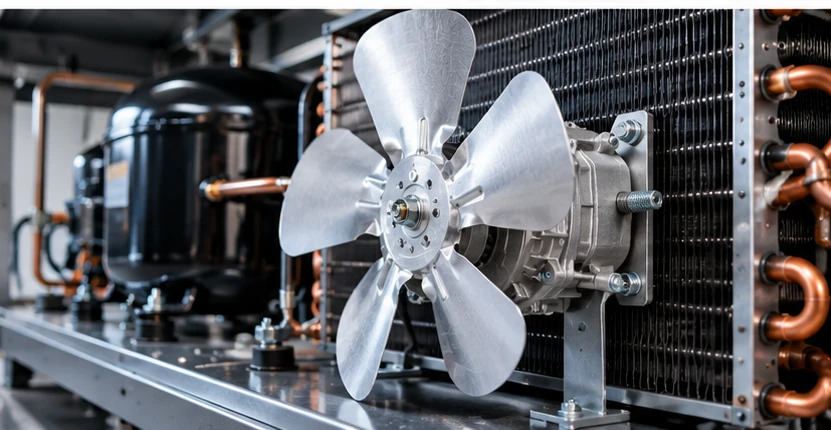
In certain compact refrigeration assemblies, a five-blade aluminum fan is directly mounted onto the motor output shaft using a central mounting hub and retaining hardware.
When selecting or replacing a motor, buyers should verify:
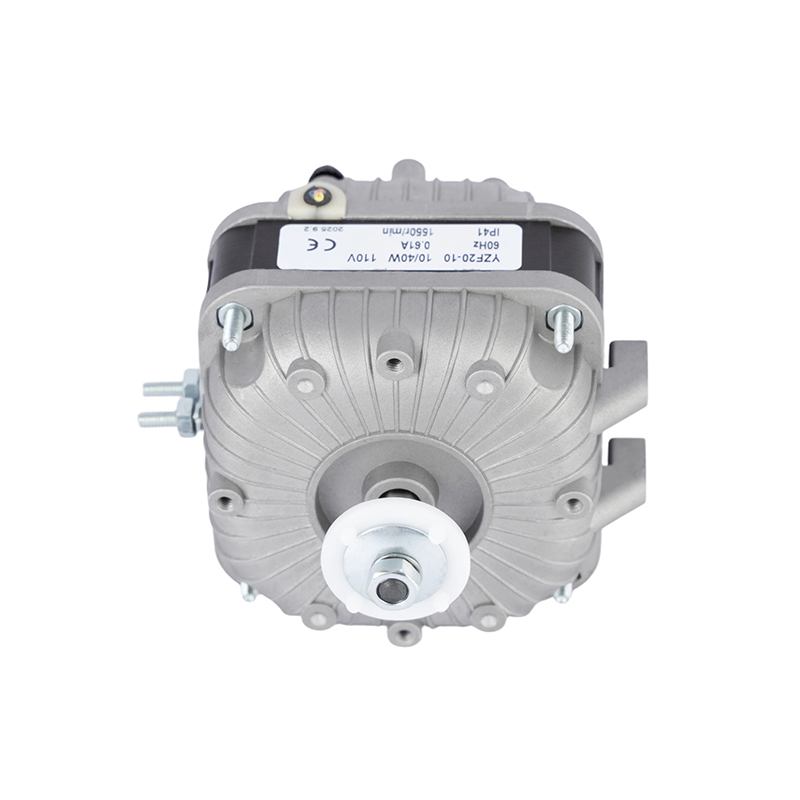
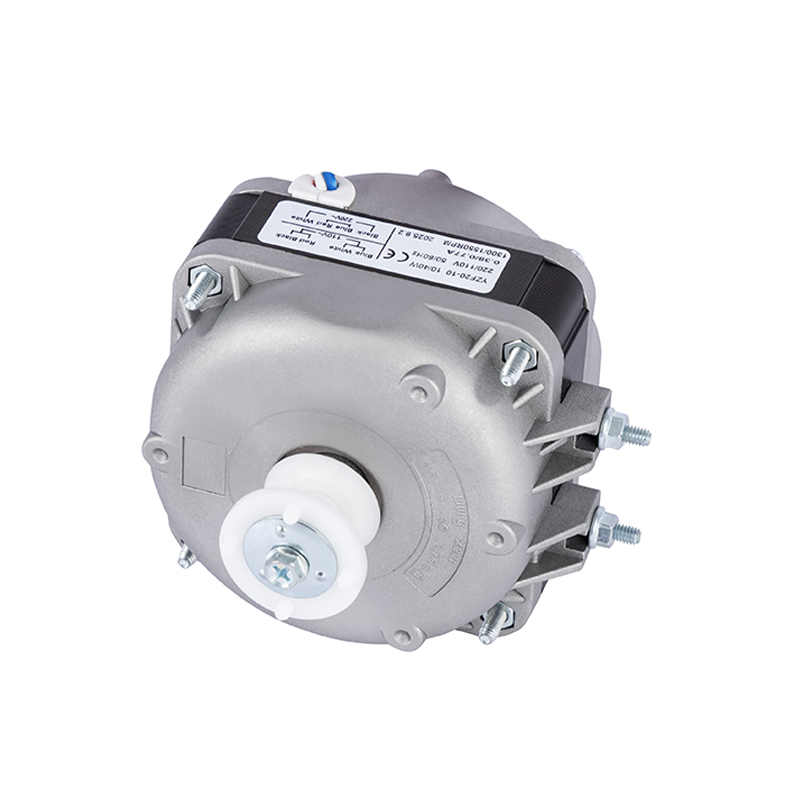
Shaft diameter and usable length
Fan hub dimensions
Mounting hardware compatibility
Fan blade clearance
Correct rotation direction
Fan blade balance and secure attachment
Improper installation can cause vibration, mechanical interference, or reduced airflow.
Condenser fan motors may operate in confined equipment compartments with elevated surrounding temperatures.
Motor insulation, allowable temperature rise, bearing design, and operating duty should be evaluated for the intended application.
Actual temperature limits and duty ratings must be confirmed from the motor manufacturer's specifications.
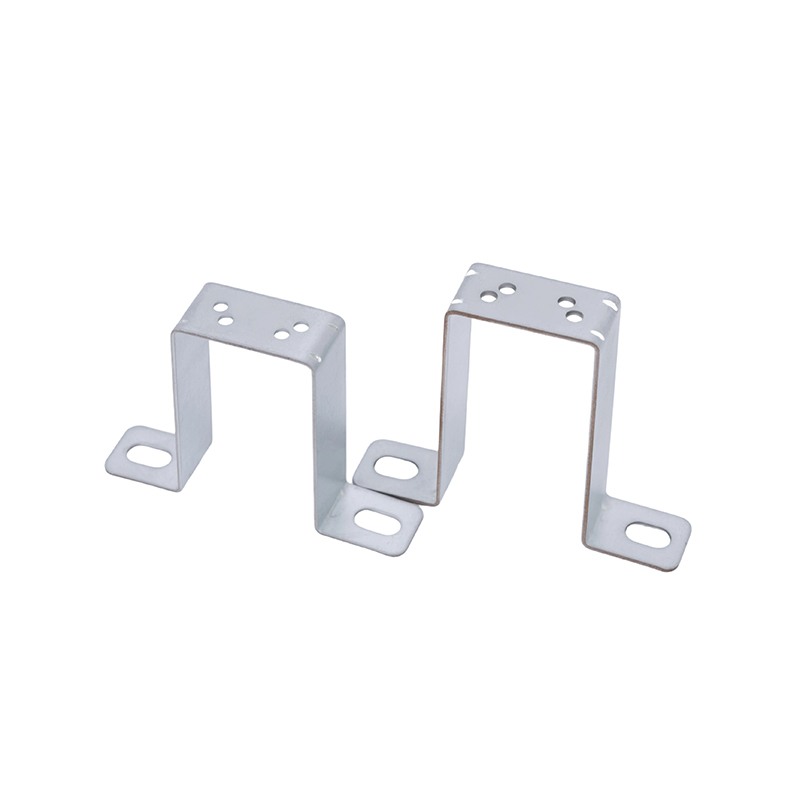
Commercial refrigeration manufacturers frequently require motors that fit existing equipment assemblies.
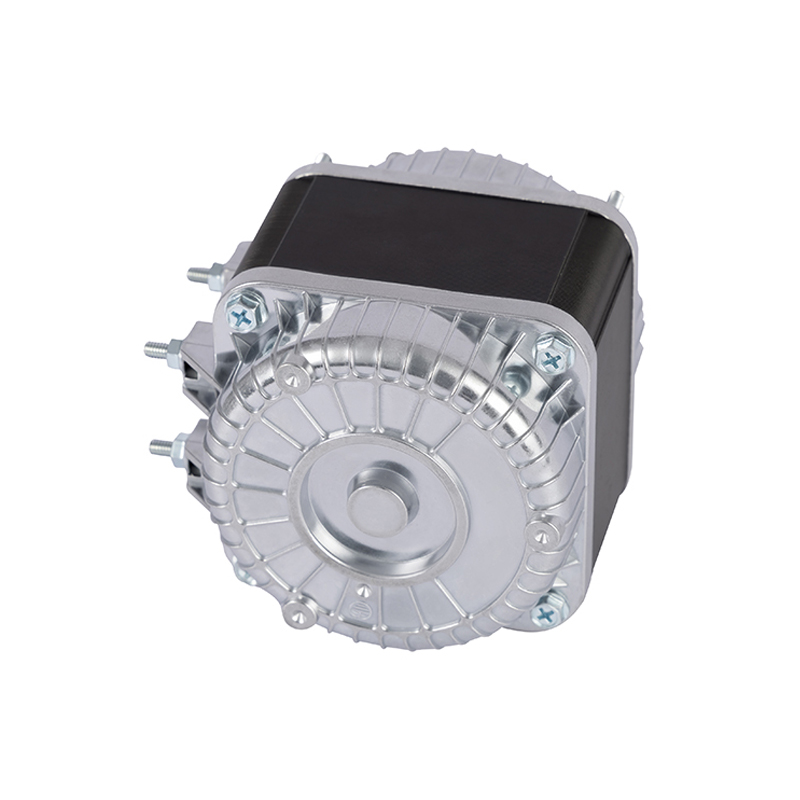
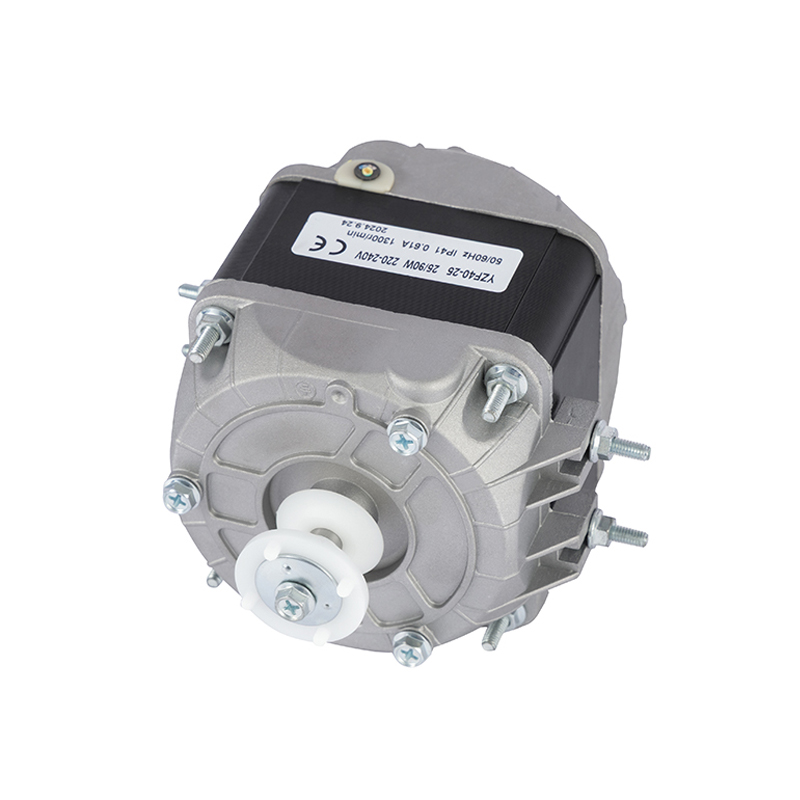
Important mechanical specifications may include mounting stud positions, overall motor dimensions, wiring connections, and compatibility with the existing fan assembly.
Clear mechanical drawings and application requirements help reduce compatibility problems during product development.
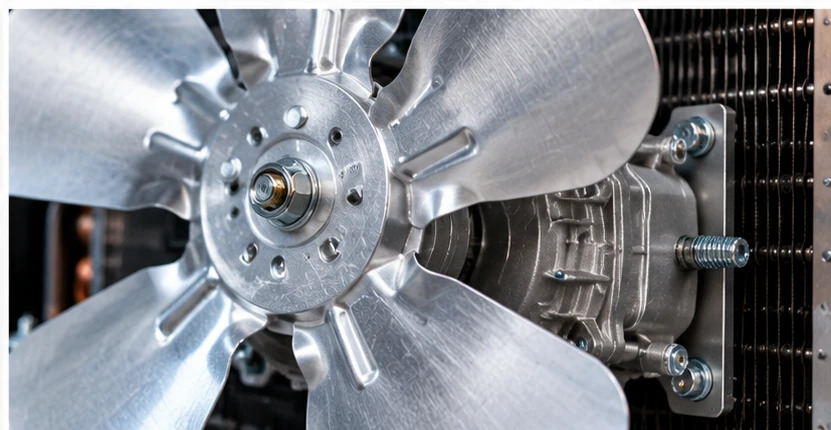
A properly assembled condenser cooling fan should maintain secure alignment between the motor output shaft and fan hub.
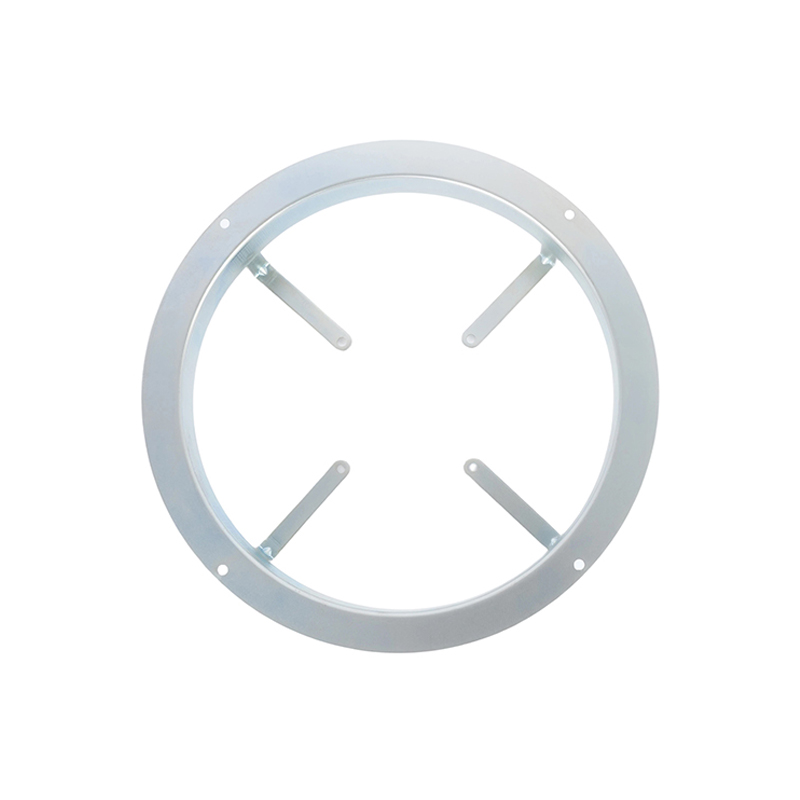
The fan blade is mounted on the motor shaft, while the motor body is secured to the equipment frame or supporting bracket.
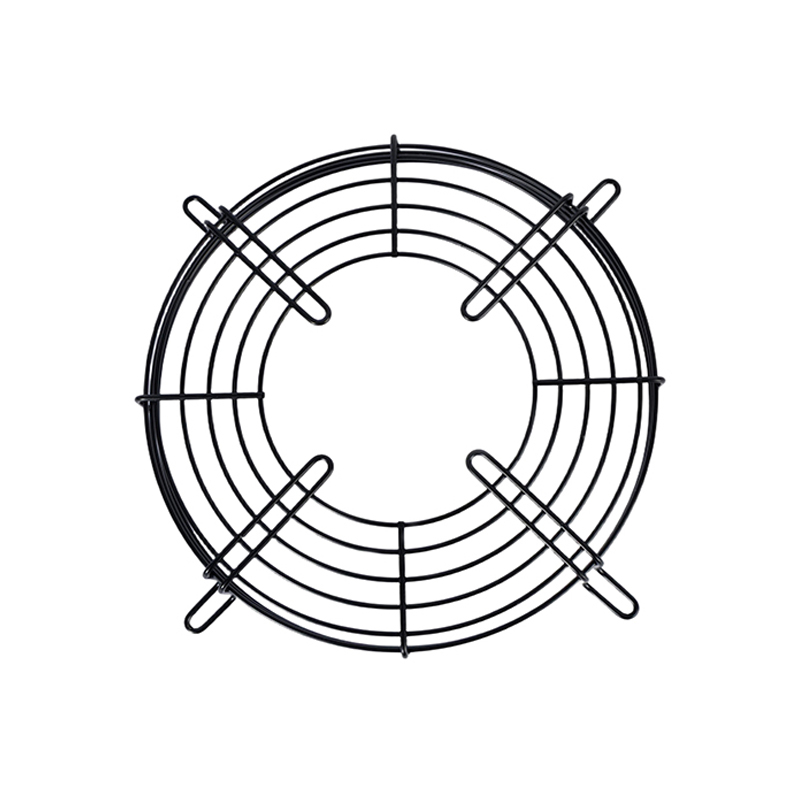
The arrangement must provide sufficient clearance for safe fan rotation and adequate airflow through the condenser.
For compact commercial freezer applications, installation details can have a significant effect on practical performance.
Manufacturers should verify the complete assembly during prototype testing rather than assuming that two motors with similar dimensions are interchangeable.
Motor technology selection is increasingly influenced by operating cost and energy-performance requirements.
Shaded pole motors offer a relatively simple and economical solution for appropriate low-power applications.
Permanent split capacitor (PSC) motors and electronically commutated (EC) motors may offer performance or efficiency advantages, depending on the application and product design.
For refrigeration equipment operating for extended periods, the energy consumption of the complete motor-and-fan system becomes an important consideration.
The most suitable technology depends on the required performance, available installation space, duty cycle, upfront cost, and total operating cost.
When sourcing condenser fan motors, international buyers can improve communication with manufacturers by providing the following information:
Required supply voltage and frequency
Target operating speed and electrical ratings
Fan blade diameter and hub dimensions
Motor shaft and mounting requirements
Operating temperature and duty conditions
Expected order quantity
Existing motor samples, drawings, or specifications
Where possible, buyers should also provide the equipment's required airflow performance.
This helps suppliers assess whether an existing product or a customized solution may be appropriate.
Hangzhou Fengyin Motor Manufacturing Co., Ltd. focuses on motor products for refrigeration, ventilation, and related equipment applications.
For international buyers looking for shaded pole motors and compatible fan motor solutions, Fengyin welcomes discussions about product dimensions, technical specifications, and OEM requirements.
Whether you are developing a commercial freezer or evaluating a replacement motor for an existing condenser cooling assembly, selecting a mechanically and electrically compatible motor is an important starting point.
Contact Fengyin Motor to discuss your shaded pole motor and refrigeration fan motor sourcing requirements.
Choosing the right condenser fan motor is not simply about finding a motor that fits. It is about matching electrical performance, mechanical design, and real-world operating conditions to support effective refrigeration system operation.


steve.yu@hzfymotor.cn

+86-19967337477

No. 145 Jiangzhi Road, Linpu Town, Xiaoshan District, Hangzhou City, Zhejiang Province, China


 English
 中文简体
 Español
 عربى