 English
 中文简体
 Español
 عربى
Industry News
Home / News / Industry News / How to Match a Shaded Pole Motor with the Right Fan Blade for Refrigeration Equipment
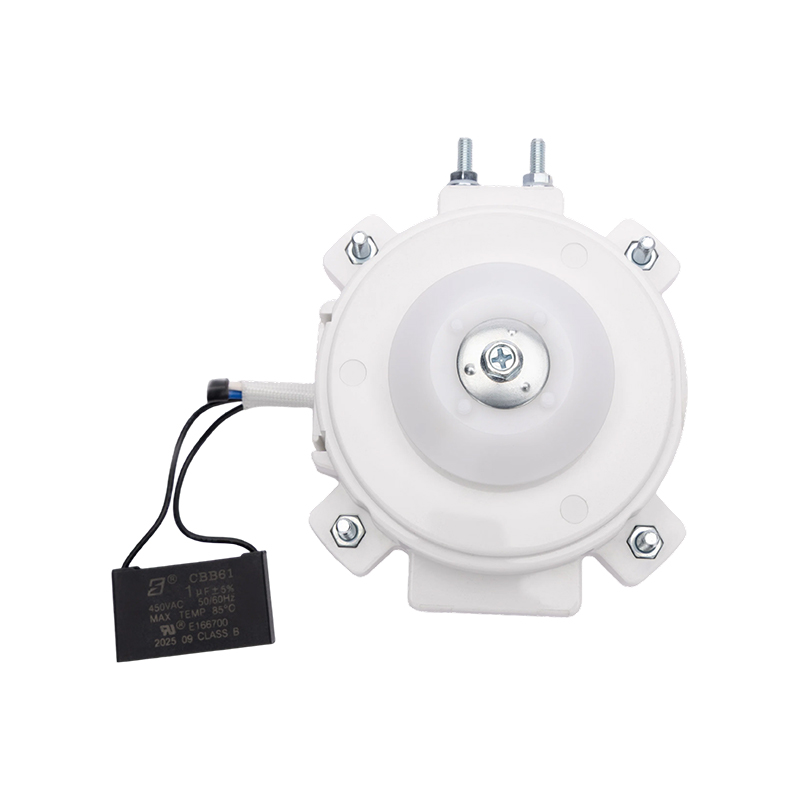
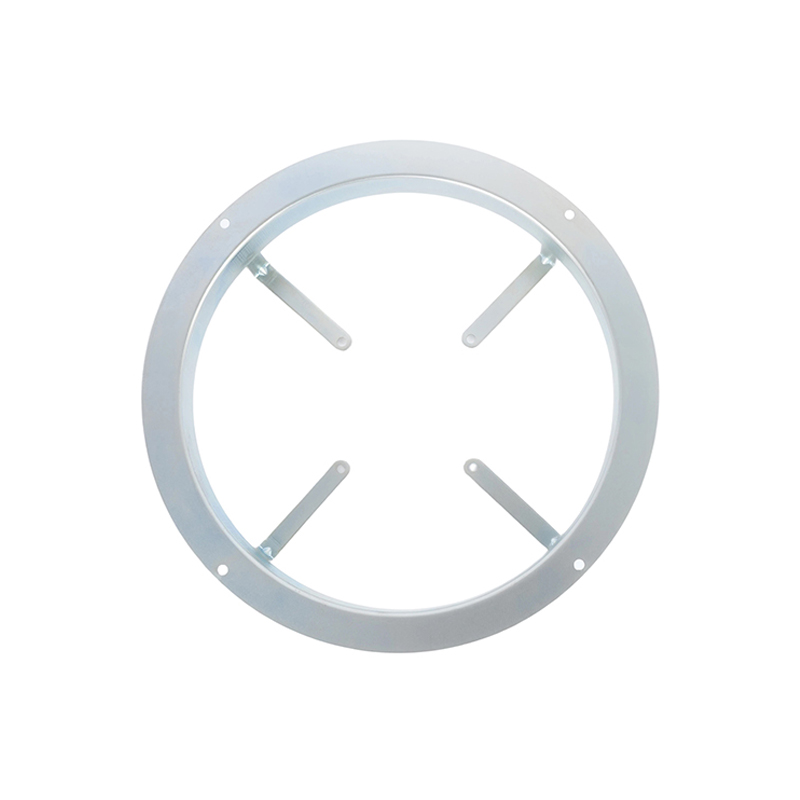
A refrigeration fan assembly typically consists of an electric motor, a fan blade or impeller, a mounting structure, and electrical connections.
The motor provides rotational power, while the fan converts that rotation into airflow.
The final performance of the assembly depends on several interacting factors:
Motor operating speed
Fan blade diameter
Blade pitch and aerodynamic design
Rotation direction
System airflow resistance
Motor torque and power capability
Mechanical installation and clearance
Even when two fan motors have similar electrical ratings, they may deliver different results when connected to different fan blades.
For this reason, evaluating the motor and fan as a complete system is more reliable than selecting components independently.
Motor speed is one of the most important parameters when selecting a refrigeration fan motor.
Rotational speed is typically expressed in revolutions per minute (RPM).
For geometrically similar operating conditions, fan performance follows relationships commonly described by the fan laws.
For a given fan geometry and air density, increasing rotational speed generally increases airflow and pressure capability while also increasing the mechanical power required.
However, these relationships have specific assumptions and should not be used as a substitute for testing the complete assembly.
In practical refrigeration applications, actual airflow is affected by the condenser coil, surrounding structures, ventilation openings, and other system restrictions.
OEM manufacturers should therefore confirm that the selected shaded pole motor can operate with the intended fan blade under real equipment conditions.
Fan diameter influences the volume of air a fan can move and the mechanical loading placed on its motor.
A larger fan is not automatically a better choice.
Its suitability depends on blade design, rotational speed, system resistance, available space, and motor capability.
Manufacturers must verify that the fan diameter is compatible with the motor's operating limits and the equipment enclosure.
The pitch angle and aerodynamic shape of a fan blade influence how air moves through the system.
For axial cooling fans, the blade geometry affects airflow, pressure characteristics, noise, and power requirements.
Changing the blade angle can alter the fan's operating point and motor loading.
Therefore, a replacement fan blade should not be selected based on diameter alone.
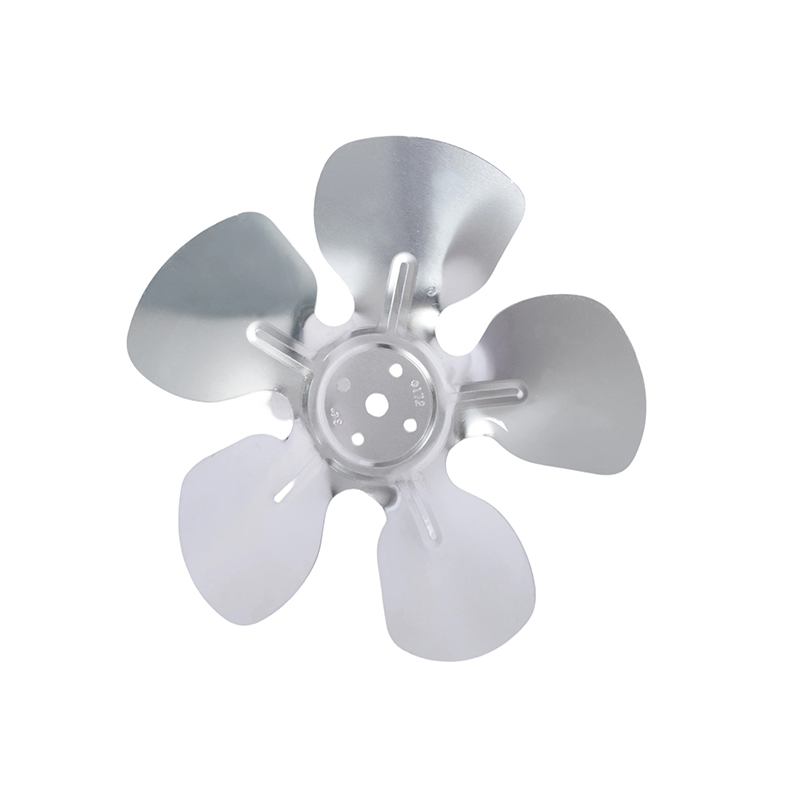
Compact refrigeration fans may use different blade configurations, including three-blade, four-blade, and five-blade designs.
Five-blade aluminum fans are one option for selected condenser cooling assemblies.
However, increasing the number of blades does not necessarily improve cooling performance.
The complete blade geometry, motor characteristics, and system conditions determine the final result.
Aluminum fan blades are used in certain refrigeration applications because they can be manufactured in lightweight configurations with suitable structural properties.
Their performance depends on material thickness, blade geometry, manufacturing quality, and mounting design.
Manufacturers should assess blade strength, balance, and compatibility with the intended operating conditions.
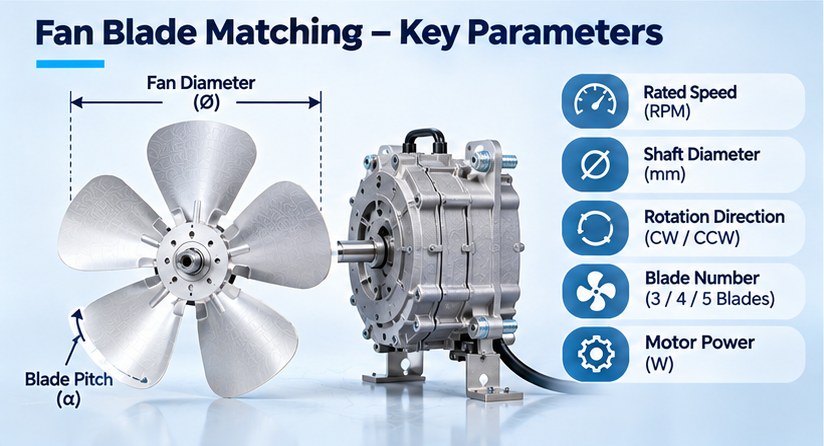
Mechanical compatibility is a critical consideration when matching a shaded pole motor with a fan blade.
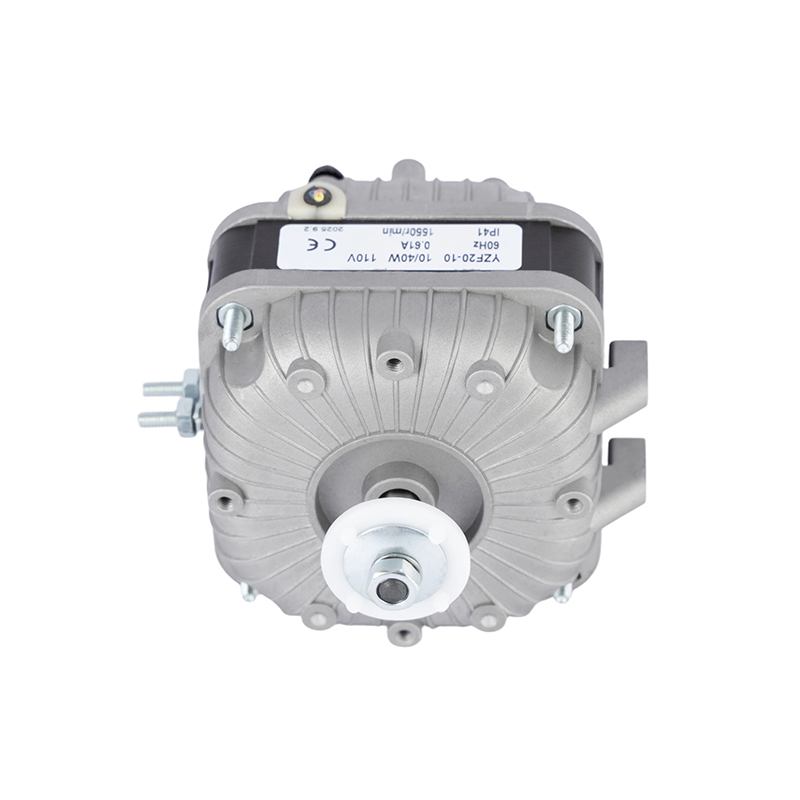
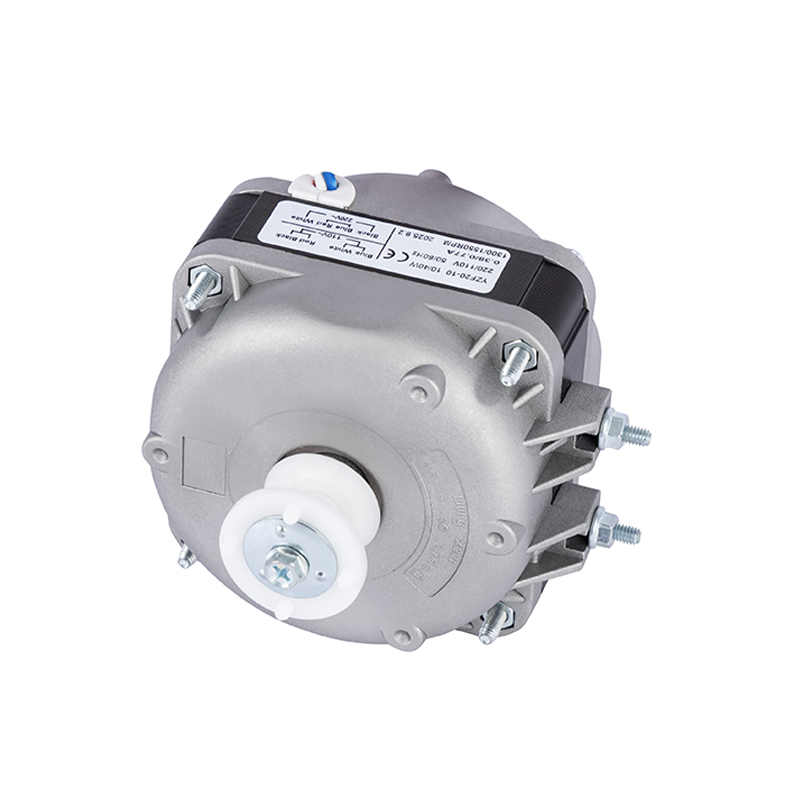
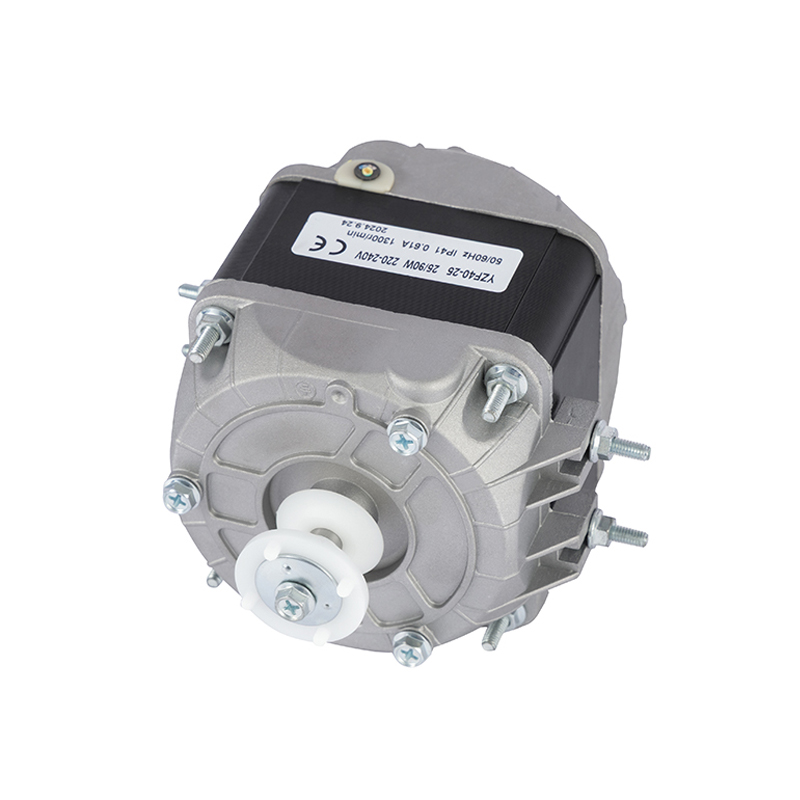
In some compact refrigeration fan assemblies, the aluminum blade is mounted directly onto the motor output shaft.
The fan hub is secured using application-specific mounting hardware, which may include a spacer, retaining nut, or other fastening components.
A correct assembly should maintain alignment between the fan hub and motor shaft.
Important installation considerations include:
Shaft Diameter
The motor shaft must fit the fan hub or specified adapter.
Shaft Length
The shaft must provide the necessary engagement while maintaining suitable clearance between the fan blade and motor body.
Mounting Position
The motor must be secured to an appropriate bracket or supporting structure.
Fan Hub Compatibility
The mounting method must be suitable for the motor shaft and fan assembly.
Blade Clearance
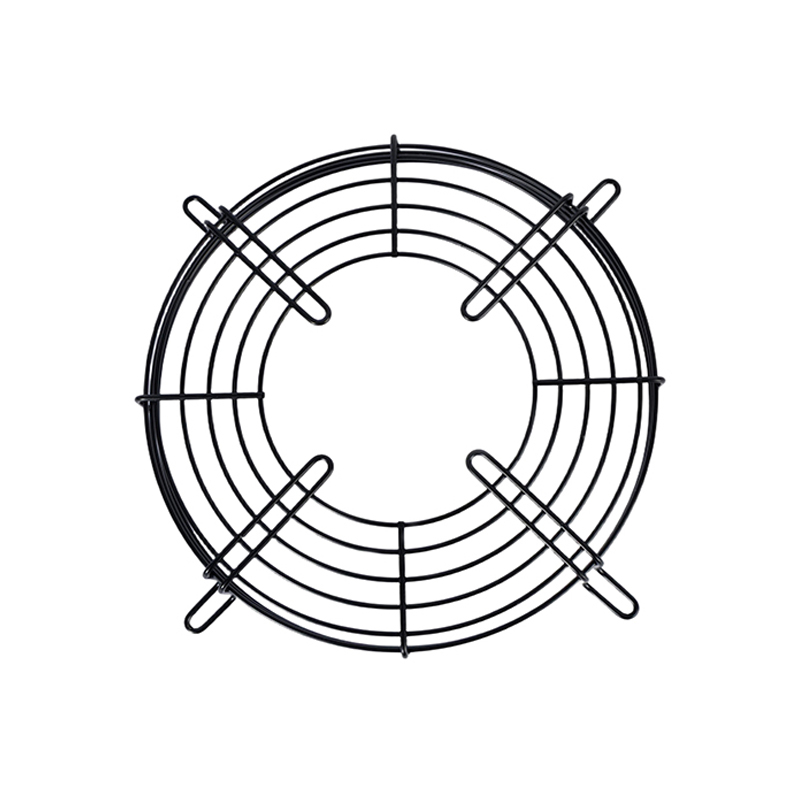
The fan must rotate without contacting the motor housing, guard, surrounding panels, or other equipment components.
Secure Fastening
All mounting hardware should be installed according to the applicable motor and fan specifications.
Proper mechanical installation supports stable operation and helps reduce unnecessary vibration.
A condenser fan must rotate in the direction intended for its blade design.
Incorrect rotation can produce insufficient airflow or move air in the wrong direction for the equipment.
Rotation direction is usually specified as clockwise (CW) or counterclockwise (CCW), but the viewing direction must also be clearly identified.
For example, rotation may be described as viewed from the motor shaft end.
It is important to verify both the motor's rotation direction and the blade's intended airflow direction before installation.
Many conventional shaded pole motors have a fixed rotation direction determined by their construction.
OEM buyers should therefore confirm the required rotation when requesting motor samples or replacement components.
A motor must be capable of driving its intended fan load under normal operating conditions.
If the fan blade requires more torque than the motor can provide, the assembly may experience difficult starting, reduced operating speed, or excessive heating.
Motor loading can be influenced by fan geometry, operating speed, mechanical resistance, and system airflow conditions.
Shaded pole motors generally have relatively low starting torque compared with many alternative motor designs.
As a result, careful load matching is especially important.
During prototype evaluation, manufacturers should inspect operating current, motor temperature, fan speed, and startup behavior under representative operating conditions.
These checks help determine whether the selected motor and fan are suitable for the application.
Accurate technical information helps motor manufacturers evaluate compatibility and potential customization requirements.
When requesting a quotation for a shaded pole motor and fan assembly, buyers should prepare the following information:
| Parameter | Required Information |
|---|---|
| Motor Type | Shaded pole AC motor |
| Rated Voltage | According to equipment requirements |
| Frequency | 50 Hz or 60 Hz, as applicable |
| Rated Speed | Target RPM |
| Fan Diameter | Required blade diameter |
| Blade Design | Blade number, pitch, and shape |
| Shaft Dimensions | Diameter and usable length |
| Rotation Direction | CW or CCW with viewing direction |
| Mounting | Bracket or mounting drawing |
| Operating Conditions | Temperature, duty cycle, and environment |
| Airflow Requirements | Target airflow and operating resistance |
| Order Quantity | Sample and estimated production volume |
When possible, buyers should also provide existing motor samples, mechanical drawings, or product photographs.
Clear specifications can help reduce communication errors and support more efficient product evaluation.
Before moving into mass production, manufacturers should validate the selected motor and fan under representative operating conditions.
Important evaluation areas include:
Electrical Performance: Verify supply compatibility, operating current, and power consumption.
Airflow Performance: Confirm that the fan assembly provides the required airflow against the expected system resistance.
Motor Temperature: Evaluate temperature rise under the intended operating conditions.
Mechanical Stability: Check blade balance, mounting security, noise, and vibration.
Startup Performance: Confirm reliable starting under applicable supply-voltage and operating-temperature conditions.
Durability: Conduct appropriate endurance testing based on product requirements.
The final test program should be defined according to the application, equipment specifications, and applicable safety requirements.
Hangzhou Fengyin Motor Manufacturing Co., Ltd. focuses on shaded pole motors and motor solutions for refrigeration, ventilation, and related equipment applications.
For international OEM buyers, selecting the correct motor involves evaluating electrical compatibility, mechanical dimensions, fan blade requirements, and expected operating conditions.
Fengyin welcomes inquiries from commercial refrigeration manufacturers, equipment suppliers, and motor distributors seeking suitable shaded pole motor solutions.
Customers can provide motor specifications, drawings, fan blade dimensions, and application requirements for technical discussions.
Looking for a Shaded Pole Motor for Your Refrigeration Fan Assembly?
Contact Fengyin Motor to discuss your motor requirements, fan blade compatibility, and OEM sourcing needs.
Matching a shaded pole motor with the correct fan blade is an important part of refrigeration equipment design.
Motor speed, blade dimensions, shaft compatibility, rotation direction, and actual operating conditions all influence the performance of the complete fan assembly.
Rather than selecting components based only on price or external appearance, manufacturers should evaluate the motor and blade together.
With appropriate component selection, mechanical installation, and prototype testing, OEM manufacturers can develop fan assemblies suited to their refrigeration equipment requirements.


steve.yu@hzfymotor.cn

+86-19967337477

No. 145 Jiangzhi Road, Linpu Town, Xiaoshan District, Hangzhou City, Zhejiang Province, China