 English
 中文简体
 Español
 عربى
Industry News
Home / News / Industry News / What Quality Inspection Standards Should Buyers Require for Aluminum Fan Blade Suppliers?
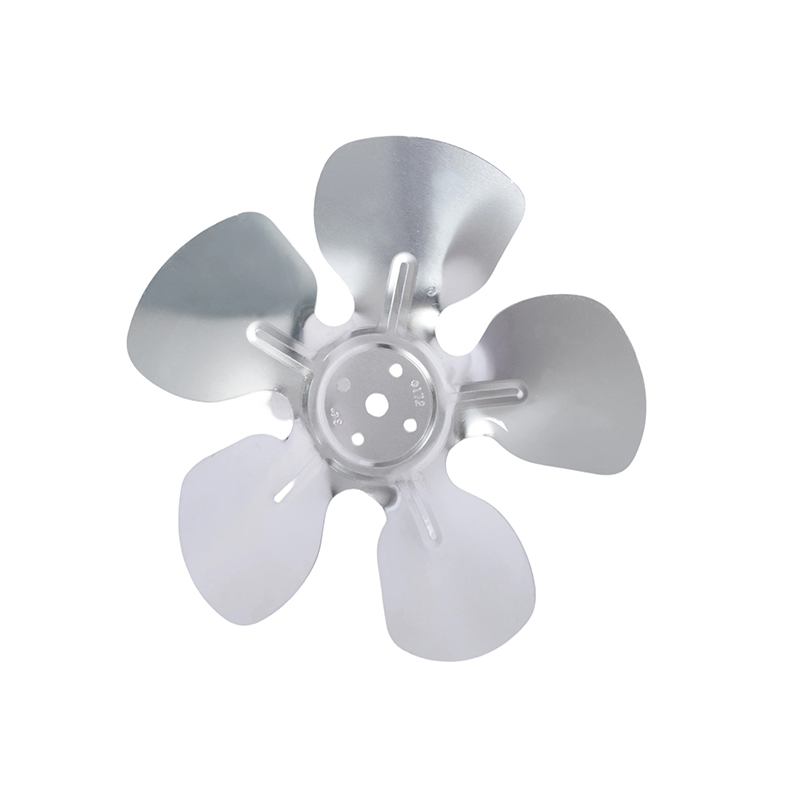
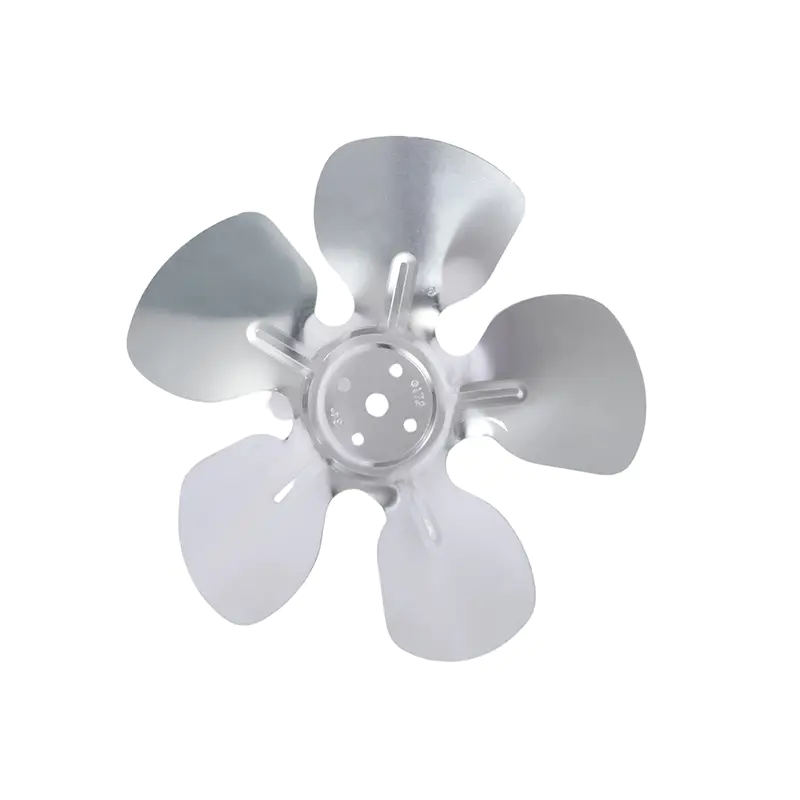
An aluminum fan blade can look perfectly fine after production and still cause problems once it is installed in a fan assembly. Slight differences in blade pitch, uneven material thickness or poor balance may lead to vibration, excessive noise and reduced operating efficiency.
For buyers, checking the appearance of a sample is not enough when assessing an Aluminum Fan Blade supplier. Material certificates, dimensional measurements, surface inspections and balance records all provide useful evidence of manufacturing quality. The inspection requirements should be agreed upon before production, rather than discussed after a batch has been delivered.
Check the Aluminum Alloy Before Production
Not all aluminum grades have the same strength, hardness or corrosion resistance. The appropriate alloy depends on the blade's dimensions, manufacturing process and operating conditions.
Buyers should specify the required alloy grade and temper in the purchase order. The supplier should be able to provide material certificates showing the alloy designation, chemical composition and relevant mechanical properties.
The main items to check are:
Depending on how the blade is manufactured, ASTM B209 for aluminum sheet and plate or ASTM B221 for extruded profiles may apply. Buyers should identify the relevant standard and material temper instead of accepting a general statement that the product uses high-quality aluminum.
Measure Blade Dimensions and Geometry
A fan blade must fit its hub and maintain the geometry specified by the design. Small differences in pitch angle, length or mounting-hole position can affect airflow and rotor balance.
Suppliers should measure the dimensions shown on the approved engineering drawings, particularly:
Calipers and micrometers are sufficient for many basic measurements. Angle gauges, profile templates and coordinate measuring machines (CMMs) may be needed for more complex shapes or tighter tolerances.
Buyers should identify which dimensions are critical to assembly and performance. Inspection reports should record actual measurement results, not simply state that the parts passed inspection.
Look Closely at Edges, Roots and Formed Areas
Scratches and dents may be cosmetic issues on some products, but cracks, sharp burrs and forming defects can affect blade strength and safe handling.
The blade root, mounting holes and transitions between flat and formed sections deserve particular attention. These areas may experience concentrated stress during operation.
Visual inspection should cover representative samples from each production batch. Where the application requires closer examination, suitable non-destructive testing can be added. Dye penetrant inspection, for example, can help identify surface-breaking defects in non-porous materials.
Edge finishing should also be controlled. Burrs left after cutting or forming can interfere with assembly, damage protective coatings or create handling hazards.
Don't Skip Balance Inspection
Balance is especially important because fan blades operate under rotation. Uneven mass distribution can generate vibration, increase bearing loads and shorten the service life of the equipment.
Checking individual blade weight and dimensions helps reduce variation between components, but it does not replace balancing the assembled rotor. The hub, blades and their mounting positions all contribute to the final balance condition.
For assembled rotors, ISO 21940-11 provides guidance on balancing procedures and tolerances for rotors with rigid behavior. The required balance quality grade should be selected according to the fan design, operating speed and application.
A useful balance report should identify the tested rotor configuration, test speed, correction method and achieved result.
Inspection Items Buyers Should Include
A purchase specification can use the following table as a starting point. The actual inspection scope should reflect the blade design and operating conditions.
| Inspection area | What to inspect | Typical method |
|---|---|---|
| Material | Alloy grade and mechanical properties | Material certificates and laboratory tests |
| Dimensions | Length, thickness, holes and pitch angle | Calipers, gauges and CMM |
| Surface | Cracks, dents, scratches and burrs | Visual inspection and suitable NDT |
| Blade consistency | Weight and geometric variation | Weighing and dimensional checks |
| Rotor balance | Residual imbalance | Dynamic balancing |
| Coating | Thickness, adhesion and coverage | Coating measurement and adhesion tests |
| Fan performance | Vibration, noise and airflow | Finished assembly testing |
Not every blade requires every test. A small ventilation fan and a high-speed industrial rotor have different performance and inspection requirements. The testing plan should reflect those differences.
Check Surface Treatment and Corrosion Protection
Aluminum naturally forms an oxide layer, but additional protection may be needed in coastal locations, humid facilities or industrial environments where chemicals are present.
Common treatments include anodizing, powder coating and conversion coatings. Buyers should ask which treatment is used and what environmental conditions it is intended to withstand.
Coating inspection can cover thickness, uniformity, adhesion, coverage around edges and mounting holes, and finish consistency. Cross-cut adhesion testing may be appropriate for certain coating systems.
Salt spray testing can help compare corrosion resistance under controlled conditions, although its results should not be treated as a direct prediction of how many years a blade will last in service.
Request Mechanical and Operational Test Records
Fan blades experience repeated loading during operation. Their ability to withstand these forces depends on the alloy, blade thickness, geometry, rotational speed and quality of assembly.
For demanding applications, buyers may need evidence of fatigue testing, vibration testing and deformation assessment. Overspeed testing may also be required for particular designs, but it must follow an approved engineering procedure with suitable safety controls.
Finished fan assemblies should be tested for the performance required by the application. ISO 5801 and ANSI/AMCA 210 may be relevant when evaluating airflow and pressure performance.
These tests assess the assembled fan, not simply the quality of an individual aluminum blade.
Review the Supplier's Quality Records
A supplier's inspection equipment matters, but so does the way inspection is managed. Buyers should check whether measuring instruments are calibrated, inspection procedures are documented and material batches can be traced through production.
ISO 9001 certification is useful evidence of a quality management system, but it does not guarantee that every delivered blade meets the buyer's drawing specifications.
Before approving a supplier, request material certificates, dimensional inspection reports, coating records and balance results where applicable. A first-article inspection is also worth arranging before mass production. It allows buyers to check the first completed parts against the approved drawings before the order moves forward.
Choose Suppliers That Can Show Their Results
When sourcing an Aluminum Fan Blade, buyers need more than a supplier's assurance that its products meet industry standards. Material records, measured dimensions, surface inspection results and balance reports provide a much clearer picture of production quality.
Agreeing on these requirements before ordering also prevents disagreements over tolerances and acceptance criteria later. For fan applications where vibration, airflow and service life matter, documented inspection results should be part of the purchasing decision, not an optional addition.


steve.yu@hzfymotor.cn

+86-19967337477

No. 145 Jiangzhi Road, Linpu Town, Xiaoshan District, Hangzhou City, Zhejiang Province, China