 English
 中文简体
 Español
 عربى
Industry News
Home / News / Industry News / Shaded Pole Motors in Ventilation Systems: Applications, Benefits and Design Considerations
Ventilation and air circulation systems are widely used in residential appliances, commercial equipment, refrigeration units, and industrial facilities. Behind many compact ventilation devices is a small electric motor responsible for driving airflow and maintaining consistent operation.
Shaded pole motors are one of the simplest types of single-phase AC induction motors. Their compact construction, straightforward operating principle, and relatively low manufacturing cost make them suitable for selected low-power fan and blower applications.
Although newer motor technologies offer higher efficiency and more advanced control capabilities, shaded pole motors continue to serve specific applications where simple operation, compact dimensions, and economical manufacturing are important.
In this article, we explore how shaded pole motors work, where they are used in ventilation equipment, and what manufacturers should consider when selecting a suitable motor.
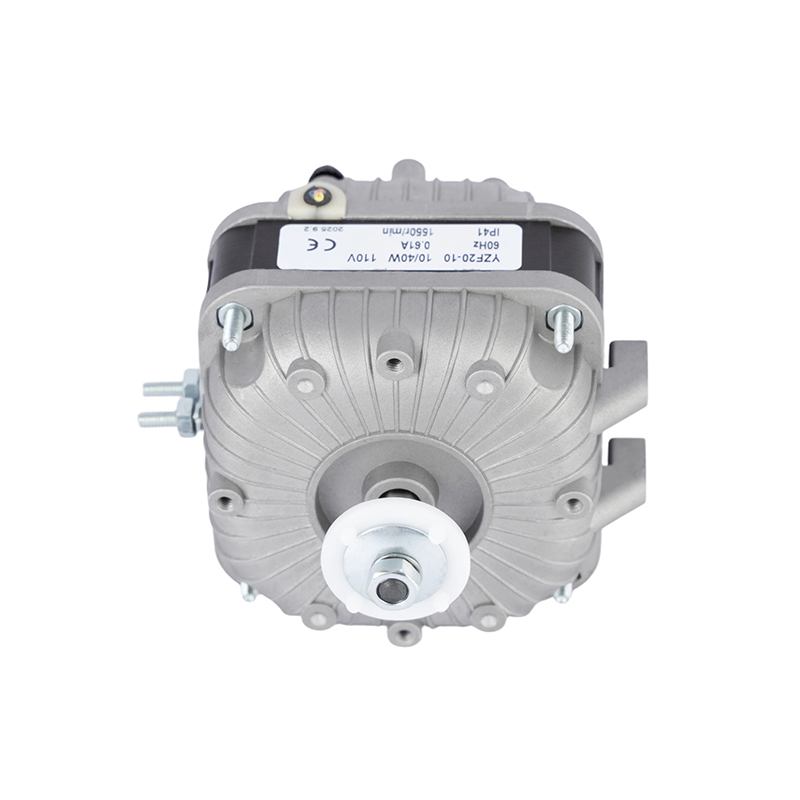
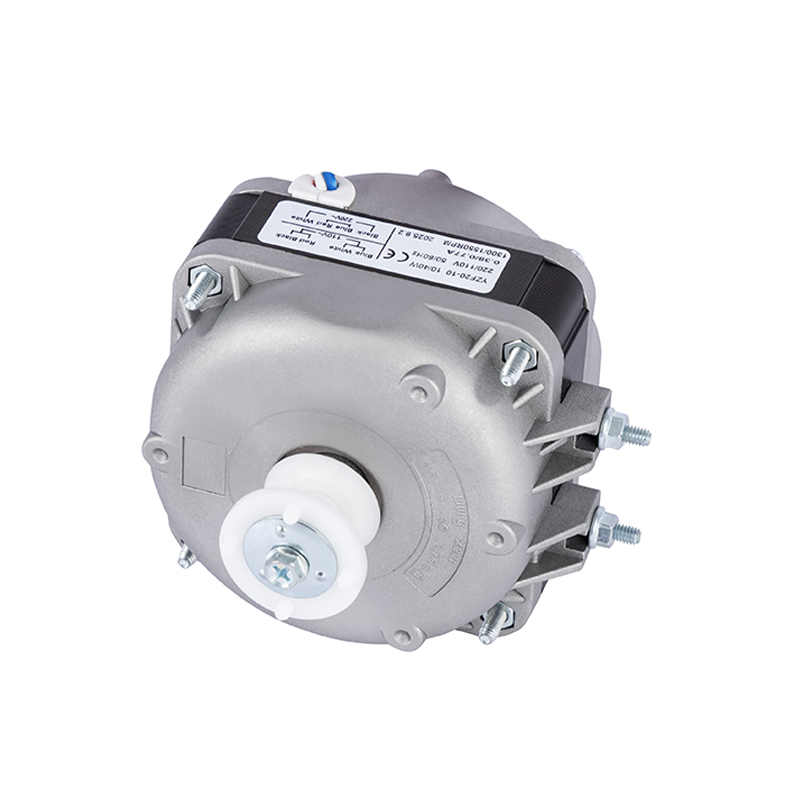
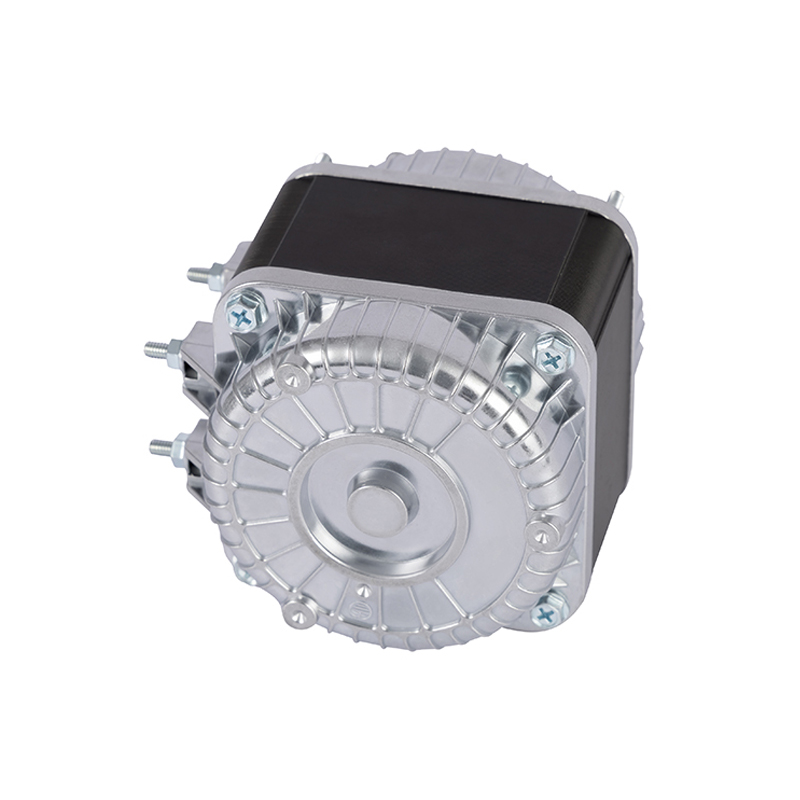
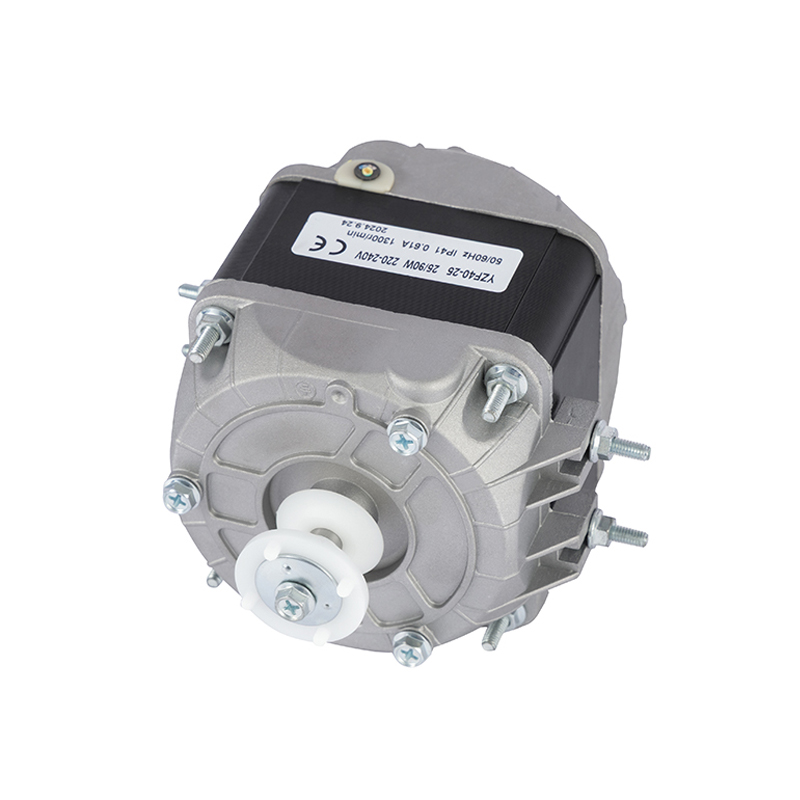
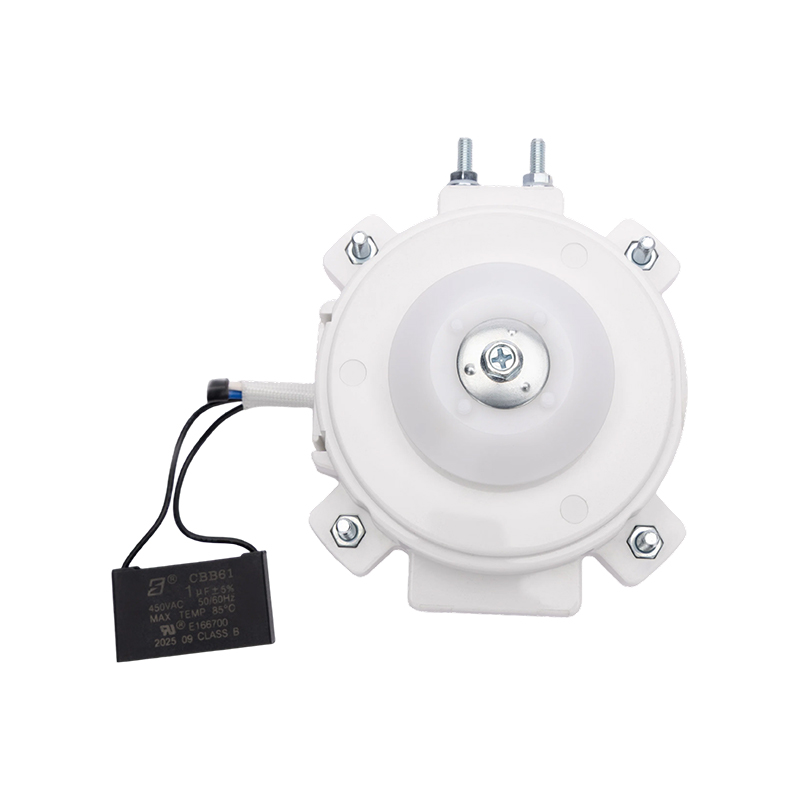
A shaded pole motor is a single-phase AC induction motor that uses a copper shading ring to create a rotating magnetic field.
Its main components generally include:
Stator core
Main winding
Copper shading ring
Squirrel-cage rotor
Motor shaft
Bearings
Motor housing
When alternating current passes through the main winding, it generates a changing magnetic field. The copper shading ring induces a secondary current that delays the magnetic flux in the shaded portion of the pole.
This phase difference creates a weak rotating magnetic field that produces starting torque and drives the rotor.
Unlike many other single-phase motor designs, a conventional shaded pole motor does not require a separate starting capacitor, centrifugal switch, or auxiliary starting winding.
This relatively simple structure makes it suitable for applications with modest power and starting torque requirements.
Shaded pole motors are commonly associated with small direct-drive fans and blowers.
Their applications depend on motor specifications, airflow requirements, and equipment design.
Compact ventilation fans are used in various appliances and equipment enclosures to support air circulation.
Shaded pole motors can be considered for small fan assemblies where the required airflow and starting torque fall within the motor's operating capabilities.
Typical design considerations include fan diameter, operating speed, mounting dimensions, and available installation space.
Certain small exhaust fans and low-power air movement devices use shaded pole motors because of their simple construction.
In these applications, the motor drives a fan blade or impeller directly.
The motor must be matched to the fan's aerodynamic load to ensure reliable starting and appropriate airflow performance.
For larger ventilation equipment or applications requiring higher starting torque, other motor technologies may be more suitable.
Refrigeration equipment requires reliable airflow to support heat exchange and temperature management.
Depending on the equipment design, small shaded pole motors may be used in selected refrigeration fan assemblies, including compact evaporator or condenser applications.
The complete motor-and-fan assembly must be evaluated according to its operating temperature, electrical specifications, required airflow, and installation environment.
Small electric motors are integrated into many household and commercial appliances.
Shaded pole motor designs may be considered for low-power ventilation and circulation functions where compact size and simple operation are priorities.
The final choice depends on the appliance's performance requirements, operating schedule, noise limits, and energy consumption targets.
The absence of a separate starting capacitor and centrifugal starting switch reduces the number of electrical components.
This straightforward construction can simplify product integration and manufacturing.
Shaded pole motors are available in small frame sizes, making them useful for equipment with limited installation space.
Their dimensions can be adapted to different fan assemblies and appliance designs.
Their relatively simple construction makes shaded pole motors a cost-effective option for suitable low-power applications.
For manufacturers producing large quantities of compact ventilation equipment, manufacturing cost and assembly requirements are important considerations.
Many shaded pole motors are designed for direct-drive fan applications.
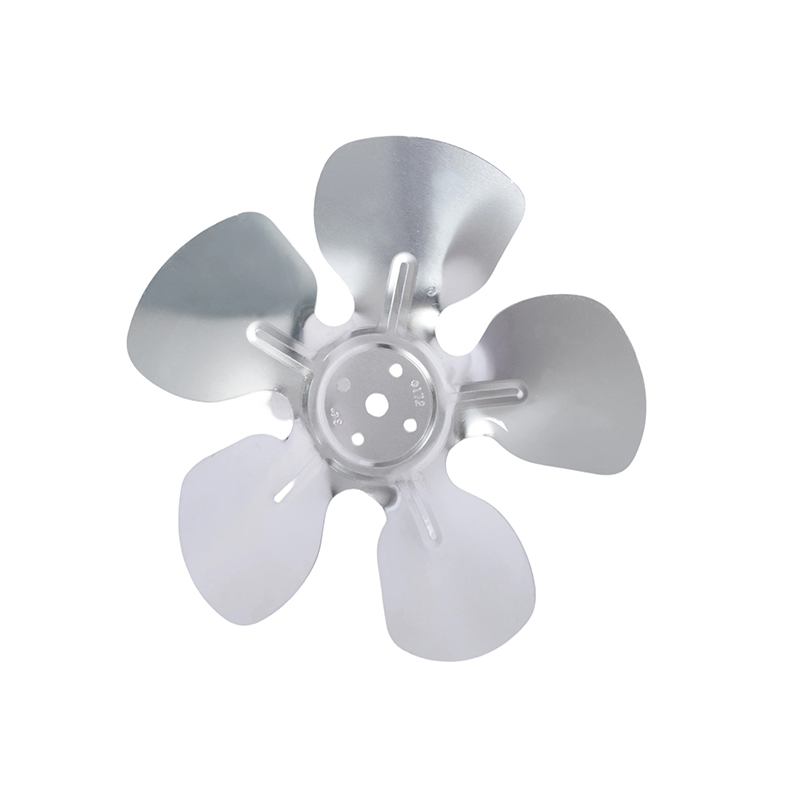
A fan blade or impeller can be mounted directly onto the motor shaft, reducing the need for additional transmission components.
Despite their advantages, shaded pole motors are not suitable for every ventilation application.
Manufacturers should understand several important limitations before selecting this motor type.
Low Starting Torque
Shaded pole motors generally produce relatively low starting torque. They are therefore better suited to lightweight fan loads that can start without substantial mechanical resistance.
Lower Energy Efficiency
Compared with many alternative motor technologies, shaded pole motors typically have lower efficiency.
For equipment operating continuously or consuming significant electrical energy, the total operating cost should be evaluated carefully.
Limited Speed and Direction Control
Conventional shaded pole motors are generally designed for a specific rotation direction. Speed adjustment may be possible with compatible control methods, but the operating range must be confirmed with the motor manufacturer.
Application-Specific Power Range
Shaded pole motors are primarily intended for small, low-power applications. Larger fans, demanding ventilation systems, and applications requiring high starting torque may need PSC, EC, or other motor technologies.
Selecting a suitable motor involves more than comparing product dimensions.
Equipment manufacturers should consider the following technical factors.
The motor's electrical ratings must match the equipment's power supply.
Common international requirements include different voltage and frequency combinations for North American, European, and Asian markets.
Always verify the rated voltage, frequency, current, and power consumption before selecting a motor.
Motor speed directly influences fan operation.
However, airflow is also affected by fan diameter, blade pitch, blade shape, and system resistance.
Manufacturers should evaluate the motor and fan as a complete assembly rather than relying on RPM alone.
The motor shaft is an important mechanical connection between the motor and fan blade.
Before purchasing a replacement or customized motor, verify:
Shaft diameter
Shaft length
Shaft extension and mounting position
Fan hub dimensions
Fixing method
Rotation direction
Fan blade clearance
Correct mechanical matching helps prevent vibration, installation difficulties, and operational problems.
Bearing design can influence operating noise, mechanical stability, and maintenance requirements.
Sleeve bearings and ball bearings have different characteristics.
The appropriate bearing should be selected according to the motor design, shaft loading, installation orientation, operating temperature, and expected service conditions.
Ventilation equipment may operate in different ambient conditions.
Motor insulation, temperature rise, thermal protection, and enclosure construction should be considered according to the intended operating environment.
These specifications are especially important for equipment operating for extended periods.
Different motor technologies serve different performance requirements.
| Feature | Shaded Pole | PSC | EC |
|---|---|---|---|
| Construction | Simple | Capacitor-based | Electronic control |
| Starting torque | Low | Application-dependent | Application-dependent |
| Energy efficiency | Generally lower | Generally higher | Generally higher |
| Speed control | Limited | Available | Advanced |
| Initial cost | Generally low | Moderate | Generally higher |
| Typical applications | Small direct-drive fans | Small and medium fans | Energy-conscious variable-speed systems |
There is no single motor technology that is ideal for every application.
Shaded pole motors are worth considering when the power requirement is small and a simple, economical fan solution is sufficient.
PSC motors may provide a better balance of efficiency and performance for certain fan applications, while EC motors are often considered when advanced speed control and improved energy efficiency are priorities.
The final selection should be based on equipment requirements and lifecycle cost.
For ventilation equipment manufacturers, standard motor specifications may not always meet the requirements of a particular product.
OEM motor customization can help address differences in installation space, fan blade dimensions, electrical ratings, and mechanical connections.
Important customization requirements may include:
Customized motor dimensions
Different shaft lengths and diameters
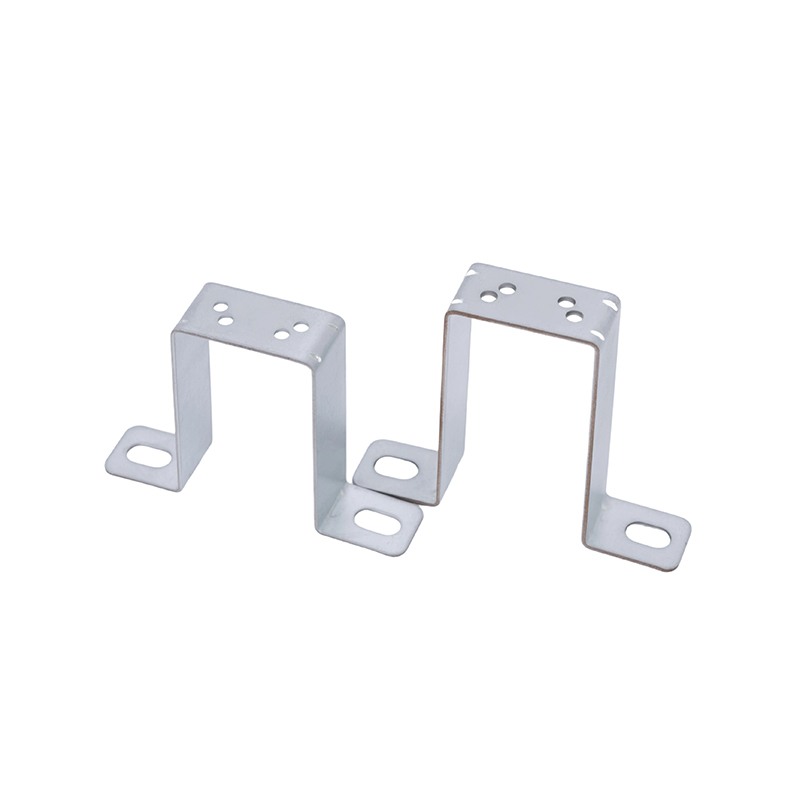
Mounting bracket configurations
Voltage and frequency options
Customized wiring and connectors
Bearing and insulation specifications
Fan blade compatibility
Providing technical drawings, samples, and equipment specifications at the beginning of a project can help manufacturers evaluate suitable solutions more efficiently.
Hangzhou Fengyin Motor Manufacturing Co., Ltd. focuses on shaded pole motors and motor solutions for refrigeration, ventilation, and related equipment applications.
For international buyers, finding a suitable motor supplier involves evaluating product consistency, technical communication, manufacturing capabilities, and the ability to meet application-specific requirements.
Fengyin welcomes inquiries from:
Ventilation equipment manufacturers
Commercial refrigeration manufacturers
Household appliance suppliers
Industrial fan manufacturers
International motor distributors
OEM and ODM buyers
Whether you require a standard shaded pole motor or a customized solution, providing your technical specifications and application details is the first step toward identifying a suitable product.
Contact Fengyin Motor to discuss your shaded pole motor requirements and OEM projects.
Shaded pole motors remain a practical option for selected compact ventilation and air circulation applications.
Their simple construction, compact dimensions, and relatively low initial cost offer advantages when the required power and starting torque are modest.
However, motor efficiency, airflow requirements, mechanical compatibility, and operating conditions must all be considered during product development.
By selecting the appropriate motor technology and working with an experienced manufacturing partner, equipment manufacturers can develop ventilation products that meet their technical and commercial objectives.


steve.yu@hzfymotor.cn

+86-19967337477

No. 145 Jiangzhi Road, Linpu Town, Xiaoshan District, Hangzhou City, Zhejiang Province, China