 English
 中文简体
 Español
 عربى
Industry News
Home / News / Industry News / What Causes Fan Motor Failures, and How Can a Fan Motor Manufacturer Prevent Them?
Fan motors sit inside ventilation systems, HVAC equipment, industrial machinery, household appliances—anywhere reliable airflow matters. When one fails, you get downtime, higher maintenance bills, lower efficiency, surprise replacement costs. Not fun for anyone.
Knowing what causes failures helps buyers pick better products and helps manufacturers improve quality. A capable Fan Motor Manufacturer can cut these risks through design, material selection, manufacturing controls, performance testing. Let's walk through the main failure causes and what can actually be done about them.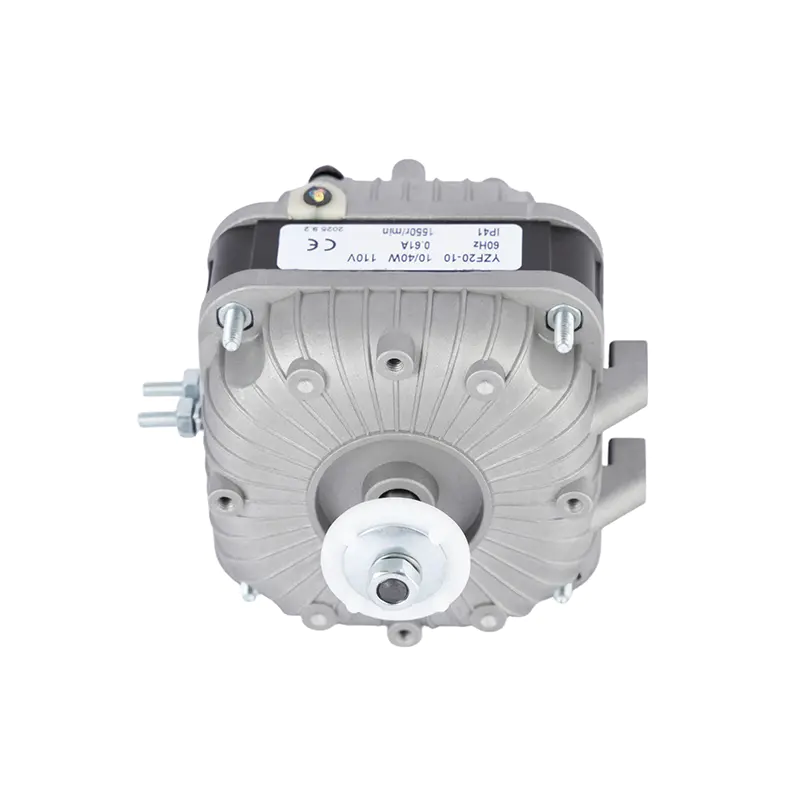
Overheating Caused by Electrical or Mechanical Overload
Overheating tops the list. When a motor runs above its intended load or temperature limits, winding insulation degrades. Eventually, electrical failure. Contributors: wrong voltage, excessive mechanical load, blocked ventilation, frequent starts, unsuitable operating conditions. High ambient temperatures make heat dissipation harder.
A manufacturer can prevent this by choosing appropriate winding materials, designing effective cooling structures, matching motor specs to the application. Thermal protection helps where suitable for the design. Validate operating temperature and load during testing. Buyers should confirm rated voltage, power, speed, duty requirements match the equipment.
Bearing Wear and Insufficient Lubrication
Bearings support the rotating shaft. Unsuitable lubrication, contamination, excessive loads, poor alignment, installation defects—they increase friction and speed up wear. Warning signs: unusual noise, rising vibration, excess temperature, reduced efficiency. Let bearing deterioration progress and it damages other components.
Reduce bearing failures by selecting bearings for the expected speed, load, temperature, environment. Shaft alignment, tolerances, clean assembly, proper lubrication procedures—equally important. Dust, moisture, continuous operation? Bearing protection and maintenance requirements deserve extra attention.
Electrical Faults and Winding Insulation Damage
Electrical problems come from voltage fluctuations, incorrect wiring, excessive current, moisture ingress, insulation deterioration. In single-phase motors, capacitor failure can stop the motor from starting or running as intended. Winding defects may develop during manufacturing or appear after prolonged operation under unsuitable conditions. Short circuits between turns generate localized heat and lead to failure.
Control winding processes. Verify conductor specs. Use insulation materials suited to the motor's electrical and thermal requirements. Insulation resistance, dielectric, winding tests help catch defects before shipment. Choose tests that match the motor design, applicable requirements, intended use.
Poor Manufacturing Quality and Component Selection
Reliability depends on component quality and consistency. Rotor balance problems, shaft dimension issues, winding quality, housing tolerances, assembly accuracy—they cause vibration, noise, overheating, premature wear. Inconsistent material quality affects long-term performance. Bearings unsuitable for the application, insulation with inadequate thermal ratings—both raise failure risk.
A reliable Fan Motor Manufacturer sets quality controls for incoming materials, assembly operations, finished products.
| Potential failure cause | Possible warning signs | Manufacturer prevention measures |
|---|---|---|
| Overheating | Excessive temperature, insulation deterioration | Thermal design validation and load testing |
| Bearing wear | Noise, vibration, increased friction | Correct bearing selection and controlled assembly |
| Electrical faults | Failure to start, tripping, winding damage | Electrical inspections and insulation testing |
| Rotor imbalance | Vibration and abnormal noise | Rotor balancing and dimensional checks |
| Moisture or contamination | Corrosion, insulation degradation | Appropriate protection and controlled assembly |
| Incorrect motor selection | Poor performance, excessive current | Application-specific specification review |
A documented quality management process helps identify recurring defects and improve production consistency.
Excessive Vibration and Incorrect Installation
Vibration sources: unbalanced rotor, misaligned shaft, loose mounting hardware, damaged bearings, external equipment connected to the motor. Persistent vibration accelerates wear and causes fatigue in mechanical components. Manufacturers can reduce internally generated vibration through rotor balancing, accurate machining, appropriate shaft design, final inspection. They should also provide clear mounting and operating instructions.
But not every vibration problem starts in the motor. Incorrect installation, unsuitable fan blades, poor mounting surfaces, misalignment with driven equipment—these create problems after delivery. Manufacturers and distributors should help customers tell the difference between motor defects and application-related issues during troubleshooting.
Moisture, Dust, and Unsuitable Operating Environments
Fan motors work in environments with airborne dust, humidity, water splashes, corrosive substances, elevated temperatures. If the motor's protection level doesn't suit the environment, contamination damages bearings, corrodes components, compromises electrical insulation. The right protection depends on the application. A clean indoor motor has different requirements from one in a dusty workshop or exposed outdoor location.
Manufacturers should evaluate enclosure design, ventilation openings, material corrosion resistance, relevant ingress protection requirements. Buyers should verify the specified protection rating and operating limits instead of assuming all fan motors handle harsh environments. Correct product selection matters especially when maintenance access is limited or equipment runs for extended periods.
How Manufacturers Can Improve Reliability Before Shipment
Preventing failures requires coordinated quality control through design, production, final inspection. Establish clear product specs. Validate designs under representative operating conditions. Inspect critical components throughout production. Final tests may cover electrical performance, current consumption, operating noise, vibration, temperature rise, starting performance—depending on motor type.
Use failure records and customer feedback to spot recurring problems. Track defect rates, warranty claims, component failures. Quality teams can then prioritize corrective actions.
When evaluating suppliers, B2B buyers should ask about:
Test reports and quality records tell you more than broad reliability claims.
Choose a Fan Motor Manufacturer That Prioritizes Long-Term Performance
Fan motor failures come from overheating, bearing wear, electrical faults, manufacturing defects, vibration, unsuitable operating environments. Many of these risks can be reduced through sound engineering, controlled production, appropriate testing, correct application selection.
For distributors, OEM buyers, equipment manufacturers—evaluating a supplier's quality controls is a step toward lower maintenance costs and better product consistency. A dependable manufacturing partner should explain motor specs, testing procedures, operating limitations, warranty arrangements clearly. Before a bulk order, review technical documentation and confirm the motor's rated performance matches the application. That practical approach helps buyers make better sourcing decisions and build more reliable long-term supply relationships.


steve.yu@hzfymotor.cn

+86-19967337477

No. 145 Jiangzhi Road, Linpu Town, Xiaoshan District, Hangzhou City, Zhejiang Province, China